
Working with organisations
Grief does not stay at the door. Somebody carries it in with them, sits down at their desk, and nobody in the building knows what they are supposed to do about it.
I sat through meetings and took in none of it. I snapped at somebody over an edit to a website, and I would like to tell you it was about the website. Eventually I was handed a dossier of my own behaviour, page after page of it, and not one line in it mentioned that I had buried both my parents twenty months apart. People kept telling me I was coping. I was moving. From the outside those look the same.
The other end of it is just as true, and I have more sympathy for it than I used to. Two capable, decent people in a well-run organisation, and between them not a clue what to do with me. Nobody was unkind. There was a process for performance. There was no process for grief.

Six things I do
Four of them are explained below. Two have pages of their own, because they take more explaining than a paragraph allows. Trauma-informed practice runs through the coaching and the training as standard rather than being sold separately, because without it they would not be much good.
Coaching for individuals
One to one, for somebody who is grieving and trying to hold down a job at the same time. It is not therapy and I am careful about the line, but it is a place to work out what you need from your employer and how to ask for it, with somebody who is not your manager and not your family.
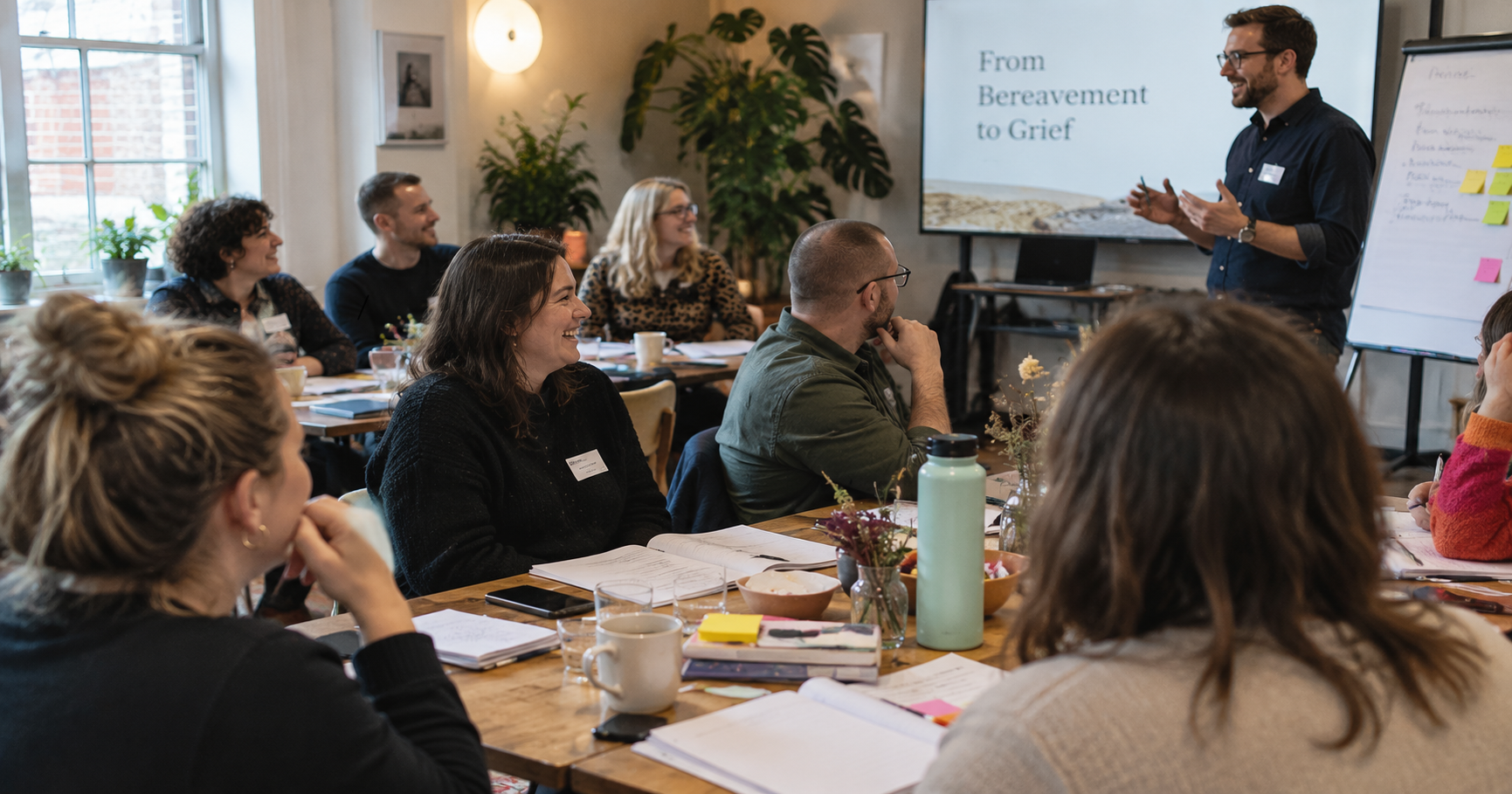
Training for managers and colleagues
What to say, when to say it, and what to do about the fortnight after the funeral when everyone stops asking. Managers get the version with the awkward conversations in it. Colleagues get the shorter one, because the person who makes the difference is often not the manager at all, it is whoever sits opposite.
An audit of your approach
I read your policy, I look at what happens in practice rather than on paper, and I talk to people who have been through it in your organisation if you will let me. You get an honest account of where somebody falls through, which is usually not where you expect.
Writing the policy that follows it
The audit tends to produce a list of things to fix, and somebody then has to write them down in language that survives contact with HR, legal and a bad week. You end up with a policy and an approach a manager can use at ten to five on a Friday.
Bereaved customers
For banks, insurers, utilities, councils and anybody else who takes the phone call that begins with somebody saying a person has died. What it costs to get this wrong is measurable, which is rare in this subject and useful when you need a budget.
End of a Phone
Being reachable in the first fortnight after a death affects your workplace, when nobody knows what to do on Monday and the decisions are being made in a hurry by people who have never had to make them before.
Who you would be working with
Me. I have spent five years as an organisational consultant and facilitator through Alkhemy: training rooms, reviews, policy work, and the slow business of getting an organisation to change something it has done the same way for a decade. That is the day job and it is what you are buying.
What I bring to this subject on top of it is fifteen years of living with it. I lost both my parents twenty months apart and went back to work afterwards, so I know what it is to be the person in the meeting taking none of it in, and I watched at close range what the organisation around me did and did not know how to do. I am not an academic and there is no qualification in grief to hold up, which is exactly why I am clear that what I am selling you is experience rather than theory.
Aftergrowth is a brand of Alkhemy Group Ltd, so the contracting and the invoicing happen there, alongside the rest of my work. It is a small family business rather than a firm, which means you get me rather than somebody I have sent.

How it starts
A conversation, not a quote
None of the six has a price on this page. What any of it costs depends on how many people are involved and what you need it to do, and I would rather work that out with you than put a number up and hope it fits. Tell me what is going on and I will tell you what I would do about it.
Or write to ollie@aftergrowth.co.uk, which reaches the same place.

